

The results hit like a ton of bricks, and have critical implications for the recently FDA-approved Alzheimer’s blood test.
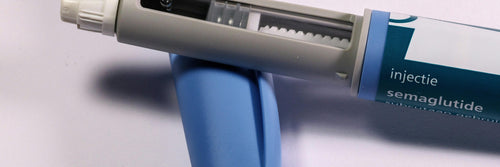
Researchers were packed wall-to-wall at a conference in San Diego last month. They were there to hear some of the most highly anticipated results in Alzheimer’s research for years. The results were from the EVOKE and EVOKE+ trials, which had been testing the impact of GLP-1 medications on patients with early-stage Alzheimer’s.
GLP-1s have been a wonder drug. They were a game changer for treating diabetes. And then they revolutionized weight-loss medicine. And we had good reason to think they might prove a powerful defense against dementia.
Then the numbers went up on the screen.
It was a total failure. The daily dose of semaglutide did nothing to delay Alzheimer’s progression [1].
“All told, semaglutide failed to distinguish itself from placebo on the primary end point of change in CDR-Sum of Boxes (CDR-SB) over a 104-week stretch, or 2-year period… there was an estimated –0.06-point (95% CI, –0.48 to 0.36) difference between oral semaglutide (2.2) and placebo (2.2; P = .7727) in EVOKE during that time… a 0.15-point difference (95% CI, –0.24 to 0.54) between semaglutide (2.1) and placebo (2.0), which was also not significant (P = .4604).”
There’s been failure after failure of treatments. And now another one.
And here’s the problem. It’s possible we’re getting nowhere because we’re detecting Alzheimer’s disease too late. By the time we know it’s there, it’s already silently wreaked havoc on brain tissue for years. More than anything else, what we need is a reliable way to find it early, when there’s still time to do something about it.
With a fresh FDA approval of a simple blood test, we may finally have it.
Table of Contents
- A Long History of Late Detection
- How We’ve Tried to Diagnose Alzheimer’s
- A Major Step Forward (and Its Limitations)
- References
A Long History of Late Detection
But there’s reason to be cautious. We’ve been here before.

For most of the hundred-year history of Alzheimer’s disease, the only way we knew for sure a person had it was to wait until they died and examine their brain.
That began to change in the 1990s. By then, we had a better understanding of the disease progression. Researchers had identified particular proteins and protein fragments that were characteristic of the condition. They had an idea: perhaps we could look at samples of the fluid surrounding the spinal cord and brain for clues about the activity of these key proteins.
Unlike blood, which has to pass the blood-brain barrier, this fluid is in direct contact with the brain [2].
It’s a little bit like going through someone’s trash to search for clues about their financial situation.
Soon, a breakthrough came. Scientists found markers in the cerebrospinal fluid that tracked tightly with Alzheimer’s disease diagnoses. One of them, for example, was beta-amyloid 42. The levels were significantly lower in patients with Alzheimer’s [3].
What Can You Do to Protect Your Brain?
Dementia prevention starts decades early. Get personalized brain health recommendations based on your age, medications, and risk factors.
Get Your Personalized Health PlanBased on these kinds of discoveries, tests of cerebrospinal fluid drawn from the lower back have been developed. They have been used extensively in studies of Alzheimer’s in the U.S., but their use hasn’t spread much outside of research [4].
Other diagnostic tools like PET scans are great, because they’ve finally given us a way to detect the physical changes in the brain caused by Alzheimer’s disease.
But there are serious drawbacks to these approaches. They’re expensive and aren’t easily accessible to all patients. Plus, the lumbar puncture used to get cerebrospinal fluid is highly invasive [5].
And that wasn’t actually a huge issue until recently. Because there wasn’t really anything we could do, even if we knew the disease was present.
But now that we have approved medications that can slow down disease progression [6]…
There’s sudden pressure on doctors to find a way to give their patients a clear answer about whether they have the disease, sooner rather than later. What we’ve been needing is a simple, cheap tool to put effective diagnosis in the hands of clinicians.
How We’ve Tried to Diagnose Alzheimer’s
It looked like it finally arrived in 2023.
Midway through that year, Quest Diagnostics announced that it would start offering an Alzheimer’s blood test directly to consumers through its clinics.

The test was built on the common, but now possibly debunked, theory that amyloid plaque formation is a central driver of Alzheimer’s disease progression [7].
The logic makes sense, though it’s worth noting that researchers are increasingly concerned amyloid plaque formation isn’t as important as we’ve thought.
Some have even found signs of fabrication in research supporting the theory [7].
But how well did the test actually work?
Some early data was presented at a conference. In a group of 209 people, the test was reported to have a sensitivity of 89%. That means out of 100 people who actually had Alzheimer’s, the test would correctly flag 89 as positive. The specificity was 71%. That means for 100 people without the disease who are tested, 29 will get a false positive result [8].
But critics were quick to raise worries. These numbers simply weren’t good enough. They would lead to mass quantities of false diagnoses.
The worry was that such a high number of false positives would spike demand for follow-up testing and services from dementia-focused clinics. This could overwhelm capacity and divert resources from those who truly needed care. Not to mention the psychological impact of false diagnoses.
The test wasn’t approved by the FDA. It didn’t need to be in order to be marketed to consumers.
But the chorus of concerns raised by the medical community prevented this test from gaining traction with doctors.
A Major Step Forward (and Its Limitations)
And that’s what makes the recent FDA approval so exciting. Because it looks like we might finally have the kind of simple, accurate test we’ve been waiting for. But there’s also an important downside, as we’ll see.

The test looks for levels of p-tau181 in the blood. It’s designed to be used with those 55 and older who are showing symptoms of cognitive decline [9].
P-tau181 is a protein that has been widely studied as a reliable biomarker to signal the presence of Alzheimer’s [10].
But how effective is this new blood test? This is where things get a bit tricky.
The test is intended to rule out Alzheimer’s disease, not to rule it in [11].
In other words, it tells you if you don’t have the disease. It’s not designed to tell you if you do.
It’s very good at the job it’s intended for. In a clinical trial, the probability that a person with a negative result truly doesn’t have the disease was about 98%. This was in a population where the disease was rare and early stage when present. It would be similar to the kind of population I’d see at the clinic [12].
So if we get a negative result on the test, we’re probably in the clear.
But what about a positive result? What does that mean?
Unfortunately, it leaves us with a lot of questions. In that same trial, the odds that a positive result meant Alzheimer’s was actually present were only about 22% [13].
But this is a step in the right direction. In theory, it should enable more targeted approaches for Alzheimer's disease treatment, because instead of a shotgun approach where treatments are given to anyone who might have Alzheimer's, we can now exclude those patients who likely do not have Alzheimer's.
Coming back to if the result is positive, it needs to be followed up with PET scans or a spinal tap to check cerebrospinal fluid [14].
And this is why the test is recommended just for those past 55 with clinical symptoms of dementia. This isn’t a routine test when we’re otherwise healthy, just to see. Because a positive result is likely going to cause a lot of stress and trigger further testing, when it’s unlikely that there’s actually a problem.
And this is also why we should be really skeptical when we see companies online advertising blood tests that can help us detect Alzheimer’s early, long before symptoms appear [15].
“P-tau217 is a key blood biomarker linked to Alzheimer’s disease that begins to change long before memory symptoms surface. Measuring p-tau217 through a simple blood test allows for earlier detection and ongoing monitoring of potential cognitive changes.”
And is a classic case for why we don’t just run every test, even if money were no object.
What Can You Do to Protect Your Brain?
Dementia prevention starts decades early. Get personalized brain health recommendations based on your age, medications, and risk factors.
Get Your Personalized Health PlanReferences
2. https://pmc.ncbi.nlm.nih.gov/articles/PMC2915796
3. https://pubmed.ncbi.nlm.nih.gov/7574461/
4. https://pmc.ncbi.nlm.nih.gov/articles/PMC10013957
5. https://jamanetwork.com/journals/jama/article-abstract/2842578
6. https://www.sciencedirect.com/science/article/pii/S1878747925000480
9. https://www.roche.com/investors/updates/inv-update-2025-10-13b
10. https://jamanetwork.com/journals/jama/article-abstract/2842578
11. https://jamanetwork.com/journals/jama/article-abstract/2842578
12. https://jamanetwork.com/journals/jama/article-abstract/2842578
13. https://jamanetwork.com/journals/jama/article-abstract/2842578
14. https://jamanetwork.com/journals/jama/article-abstract/2842578