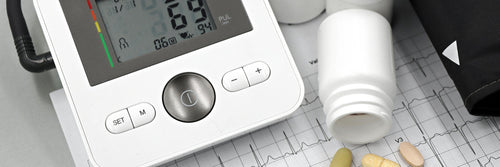


I take 1.25mg of tirzepatide every week. Tirzepatide is the active ingredient in Mounjaro and Zepbound.
I’m a 34-year-old GP. I don’t have type-2 diabetes. I’m not overweight. And there is no randomised trial that says I should be doing this.
Every trial you’ve heard of — SELECT [1], FLOW [2], SURPASS-CVOT [3] — enrolled people with diabetes, obesity, kidney disease, or established heart disease. None of them studied someone like me.
Here’s why I do it anyway.
Table of Contents
- The Drug That Kept Becoming Something Else
- The Joint Surprise
- Liver and Alcohol
- Why Tirzepatide and Not Pure GLP-1
- This Is the Bet I am Making
- Why Not Retatrutide
- What It Has Done for Me
- Safety Concerns
- Micronutrients and MicroVitamin
- References
The Drug That Kept Becoming Something Else
When John Eng found GLP-1 in the saliva of the Gila monster in the early 1990s, all it was supposed to do was lower blood sugar. He was an endocrinologist at the Bronx VA, working on lizard venoms in his spare time. The peptide he isolated acts on the same receptor as human GLP-1, but lasts much longer in the body. It became Byetta — the first GLP-1 drug approved, in 2005 [4].
But in the early diabetes trials, not only did patients lower their blood sugar levels, which was expected, but they also started losing weight. And not just a little bit of weight. Enough that doctors started noticing. By the mid-2010s, the SCALE trial had confirmed that liraglutide, which is another GLP-1 medication, caused significant weight loss [5].

By 2021, the STEP program tested semaglutide at a higher 2.4mg dose for obesity, and it resulted in around 15% body-weight loss. The GLP-1 medications had graduated from just a blood-sugar drug to a weight-loss drug [6].
And the field assumed — reasonably — that every benefit from here on out would just be downstream of the weight coming off.
But that’s not what the trials found.
Surprise number two. November 2023. The SELECT trial. More than 17,000 adults with overweight or obesity and established heart disease — but no diabetes — randomised to weekly semaglutide or placebo. After a little more than three years, semaglutide cut major cardiovascular events by 20% [1].

Twenty percent. In people without diabetes. And when the trialists ran the numbers separately for people who lost a lot of weight versus very little, a chunk of the cardiovascular benefit didn’t track with how much weight came off. This is important. GLP-1 medications appeared to offer cardiovascular benefits beyond the weight-loss effect.
Surprise number three. May 2024. The FLOW trial. About 3,500 adults with type-2 diabetes and chronic kidney disease — semaglutide versus placebo. The primary kidney composite — a combination of kidney failure rates, large eGFR drops, kidney or cardiovascular death — dropped by 24% [2].

And the authors said something specific. The effect on kidney health was unrelated to changes in body weight.
Again, weight loss wasn’t the whole story. GLP-1 medications were offering other additional benefits.
Is a GLP-1 the right move for your situation?
GLP-1 medications are not for everyone. Use Health Roadmap to map your own labs, risk factors, and goals against the evidence — and get a personalized health plan you can take to your doctor.
Get Your Personalized Health PlanThere’s also new evidence that GLP-1 meds are associated with a reduction in cancer progression. Real-world data presented at ASCO 2026 suggests GLP-1 receptor agonists may reduce metastatic progression of certain obesity-related cancers — lung, breast, colorectal, and liver [7].
The Joint Surprise
Surprise number four, and this one is remarkable.
Cartilage has no blood supply. No nerves. No efficient way to deliver the cells and nutrients needed to grow new tissue. It’s one of the few structures in the human body that, once damaged, is severely limited in its ability to repair itself [8].
But then patients on Ozempic started saying something that their doctors initially dismissed. Their joints felt better. Not just less pain from carrying less weight. Something else. Something unexpected.

The obvious explanation was weight loss. Less weight means less mechanical pressure on joints. Every kilogram you lose takes roughly four kilograms of stress off your knees [9].
So when Ozempic patients reported less joint pain, doctors shrugged: of course your knees hurt less — you lost 30 pounds.
The STEP 9 trial, published in the New England Journal of Medicine in 2024, seemed to confirm this. 407 patients with obesity and knee osteoarthritis. After 68 weeks, pain scores dropped 42 points with semaglutide compared to 28 with placebo. But patients also lost 13.7% of their body weight [10].
Case closed. Or so everyone thought.
But a team of researchers at the Shenzhen Institutes of Advanced Technology — part of the Chinese Academy of Sciences — weren’t satisfied with that explanation. Led by Di Chen, they designed an experiment that would test it directly.
This is the study that changes the conversation. Chen’s team took mice with osteoarthritis and split them into groups. One group received semaglutide. Another group was pair-fed — meaning they were given restricted calories, carefully controlled so they lost the exact same amount of weight as the semaglutide group. Same weight loss. No drug [11].

If the joint improvements were “just the weight loss,” both groups should look the same.
They didn’t. The pair-fed mice lost the same weight. But their cartilage kept deteriorating. Only the semaglutide group showed preserved cartilage, reduced inflammation, and fewer bone spurs. Same weight loss — completely different outcomes in the joints.
Di Chen explained the implications: this controlled experiment demonstrates that semaglutide’s protective effect on cartilage in osteoarthritis is independent of weight loss, challenging the traditional belief that osteoarthritis improvement relies solely on weight reduction [12].
So if it’s not weight loss, what’s happening?
Here’s the simplest way to think about it. Your cartilage cells — called chondrocytes — need energy to maintain and repair the tissue around them. In osteoarthritis, those cells get stuck running on an inefficient fuel source. Think of it like a factory running on a sputtering generator. It’s barely enough energy to keep the lights on. Not nearly enough to rebuild anything.
What semaglutide does is flip a switch inside those cells that upgrades them to a clean, efficient energy source that produces dramatically more energy — enough to actually start repairing. Technically, GLP-1 receptors — which nobody expected to find on cartilage cells — activate the AMPK-PFKFB3 signalling cascade, shifting the cells from glycolysis to oxidative phosphorylation [11].
But mouse cartilage isn’t human cartilage. Does it actually work in people?
Chen’s team ran a pilot clinical study. 20 patients aged 50 to 75, all with obesity and knee osteoarthritis. Half received standard treatment — hyaluronic acid injections. The other half received hyaluronic acid plus weekly semaglutide.
After 24 weeks, they put them in MRI scanners. The semaglutide group showed an average 17% increase in cartilage thickness, suggesting regeneration. The control group: less than 1%. The thickened cartilage was visible in weight-bearing areas of the knee — the areas that take the most punishment [11].
Patients also experienced reduced pain and improved joint function.
Liver and Alcohol
We also see benefits for liver and addiction.
The ESSENCE trial of semaglutide for biopsy-defined MASH (the more severe form of fatty liver disease) found that resolution of steatohepatitis without worsening of fibrosis occurred in 62.9% of the semaglutide group versus 34.3% of the placebo group [13].
And in 2026, The Lancet published a randomised, double-blind, placebo-controlled trial of once-weekly semaglutide in patients with alcohol use disorder and comorbid obesity. Semaglutide was associated with a reduction in heavy drinking days compared with placebo [14].

Two more organ systems. Two more results in tissues nobody set out to study.
Why Tirzepatide and Not Pure GLP-1
What I’ve discussed so far is the evidence for GLP-1 medications. But I chose to use tirzepatide, which is a combination of GLP-1 and GIP. Tirzepatide is sold under the brand names Mounjaro (for type-2 diabetes) and Zepbound (for obesity).
Why did I do this?
Well that brings us onto the final piece of the discovery arc — the trial that compares the drug classes against each other for the first time.
SURPASS-CVOT, published in two stages — the primary outcome in NEJM in December 2025, and a follow-up cardiorenal analysis in JAMA Cardiology in March 2026. Tirzepatide — the dual GLP-1 plus GIP drug — versus dulaglutide, which is pure GLP-1. Thirteen thousand patients with type-2 diabetes and established heart disease, followed just over four years [3].
Here is the part the headlines didn’t put first. The primary endpoint was the classic three-point MACE — cardiovascular death, heart attack, or stroke. Tirzepatide did not beat dulaglutide on that endpoint. It cleared the “no worse than” bar cleanly. But on the harder question — “is it actually better?” — the result came in just short of the threshold the researchers had committed to before the study started. By their own rules, going in, that counts as a miss.
Now here is the part that made the conversation. The same investigators ran an after-the-fact — “post-hoc” — analysis in JAMA Cardiology 2026. They widened the endpoint to six components — adding heart-failure hospitalisation, coronary revascularisation, all-cause death, and a renal composite to the original three. On that wider endpoint, tirzepatide reduced risk by 16% relative to dulaglutide.
Overall, we have evidence that GLP-1 meds offer benefits beyond just the weight-loss effect.
This Is the Bet I am Making
What does this all mean for someone like me — a lean, non-diabetic 34-year-old GP — for whom none of those trials were designed?
Here’s where I have to be most careful.
I’m not assuming the trial results automatically apply to me. That would be hard to justify. None of these studies enrolled lean, non-diabetic adults.
The bet I am making is narrower. Across several studies, these drugs seem to produce some biological effects that are partly independent of weight loss itself. I’m interested in exposure to those mechanisms — not in pretending I belong to the same population as the trial participants.
I’m not the first physician to publicly disclose this. Dr Michael Albert — a US internist — wrote about taking low-dose tirzepatide for two years in March 2026, framed as a personal choice, not a recommendation [15].

His piece is worth reading in full if you want a longer first-person account of the same bet.
Why Not Retatrutide
But why have I chosen tirzepatide and not the new triple agonist called retatrutide?
Retatrutide has a third component that acts on the glucagon receptors. Glucagon agonism increases metabolic rate. For an obesity drug at population level, that’s a feature. For me — trying to maintain lean mass, not burn more of it — pushing energy expenditure up is the wrong direction.
With that rise in metabolic rate comes a dose-dependent rise in resting heart rate — three to seven beats per minute in a phase 2 trial [16].
Tirzepatide also raises heart rate, typically two to four beats per minute. That signal is seen across GLP-1-based drugs, but appears more pronounced with retatrutide’s added glucagon activity [17].
And the phase-3 retatrutide cardiovascular data is still pending.
For me though, I don’t want to take something that speeds up my metabolic rate when I don’t need to speed up my metabolic rate.
What It Has Done for Me
Coming back to low-dose tirzepatide — since using it I’ve noticed a significant drop in food noise. It’s way easier to stick to a healthy diet, because the cravings for junk food are gone. Plus, I have genetically high blood pressure and since using tirzepatide, I’ve managed to cut my blood pressure meds in half.
It did make me feel rubbish though when I first started it. I felt nauseous and tired. With each injection, though, the side effects lessened and now I have no side effects whatsoever.
I look after my muscle mass via resistance exercise and good protein intake.
Safety Concerns
There are a few other safety concerns I needed to factor into my decision to start.
There was a concern about pancreatitis, however from the real-world data there’s been no increase — no clear evidence of risk for pancreatitis was observed [18].
There’s also no signal of increased risk of thyroid cancer from the real-world data. The incidence of thyroid cancer in semaglutide-treated patients was less than 1%, suggesting no significant risk [19].
And the FDA and EMA — the European drug regulator — both reviewed the suicide signal in 2024 and found no causal link. Preliminary evaluation does not suggest a causal link [20].
Micronutrients and MicroVitamin
The final concern with GLP-1 meds is micronutrient levels.
I am eating less food since being on low-dose tirzepatide, and have lost 3kg over 9 months. On a GLP-1, daily calorie intake typically drops by 16 to 39% [21].
The American College of Lifestyle Medicine, the American Society for Nutrition, the Obesity Medicine Association, and The Obesity Society have published a joint advisory. They suggest considering a multivitamin-mineral tablet. They don’t say it’s required. They don’t say it fixes the deficiencies [22]. Examples of nutrients of concern include iron, calcium, magnesium, zinc, and vitamins A, D, E, K, B1, B12, and C.
That’s part of why I take MicroVitamin every day — a 25-ingredient daily multivitamin that covers the at-risk nutrients flagged in the joint advisory above (vitamin D, B12, magnesium, zinc, and others).
MicroVitamin has now been third-party tested by Labdoor and it scored a 99.7% score [23]. But just because I take a supplement does not mean that you should as well.

Overall, I’m happy with my bet on low-dose tirzepatide.
Is a GLP-1 the right move for your situation?
GLP-1 medications are not for everyone. Use Health Roadmap to map your own labs, risk factors, and goals against the evidence — and get a personalized health plan you can take to your doctor.
Get Your Personalized Health PlanReferences
1. https://www.nejm.org/doi/full/10.1056/NEJMoa2307563
2. https://www.nejm.org/doi/10.1056/NEJMoa2403347
3. https://www.nejm.org/doi/abs/10.1056/NEJMoa2505928
4. https://en.wikipedia.org/wiki/Exenatide
5. https://www.nejm.org/doi/full/10.1056/NEJMoa1411892
6. https://www.nejm.org/doi/full/10.1056/NEJMoa2032183
8. https://pmc.ncbi.nlm.nih.gov/articles/PMC10071204/
9. https://pubmed.ncbi.nlm.nih.gov/15986358/
10. https://www.nejm.org/doi/abs/10.1056/NEJMoa2403664
11. https://www.cell.com/cell-metabolism/fulltext/S1550-4131(26)00008-2
13. https://www.nejm.org/doi/full/10.1056/NEJMoa2413258
14. https://www.thelancet.com/journals/lancet/article/PIIS0140-6736(26)00305-3
16. https://www.nejm.org/doi/full/10.1056/NEJMoa2301972
17. https://www.nejm.org/doi/full/10.1056/NEJMoa2107519
18. https://pubmed.ncbi.nlm.nih.gov/32720500/
19. https://pmc.ncbi.nlm.nih.gov/articles/PMC11050669/
21. https://pmc.ncbi.nlm.nih.gov/articles/PMC11340591/
22. https://pmc.ncbi.nlm.nih.gov/articles/PMC12304835/
23. https://labdoor.com/review/dr-brad-stanfield-microvitamin