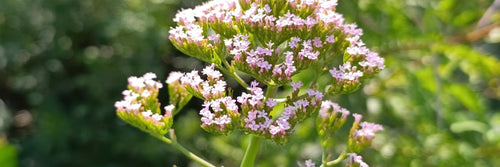


Rhodiola (Rhodiola rosea L.) is an herb that grows in cold regions and at high altitudes in Eastern Europe, Asia, and North America. Traditionally used in Russia and Scandinavia for work performance, endurance, fatigue, depression, and altitude sickness, it is promoted today as an "adaptogen" — a substance thought to help the body modulate its response to stress.
The root of R. rosea contains two key classes of bioactive compounds: rosavins (marker compounds distinguishing R. rosea from other species) [1] and salidroside, which in combination with rosavins may drive the herb's antidepressant effects [2]. Small, short-term studies suggest several potential benefits, but the NIH NCCIH states there is insufficient reliable evidence to determine whether rhodiola is useful for any health-related purpose [3].
Table of Contents
- Overview
- Forms and Bioavailability
- Evidence for Benefits
- Recommended Dosing
- Safety and Side Effects
- Drug Interactions
- Dietary Sources
- References
Overview
Rhodiola (Rhodiola rosea L.) is an herb that grows in cold regions and at high altitudes in Eastern Europe (Siberia), Asia, and certain parts of North America. Traditionally used in Russia and Scandinavia for work performance, endurance, fatigue, depression, and altitude sickness, it is promoted today as an "adaptogen" — a substance thought to help the body modulate its response to stress.
The root contains two key classes of bioactive compounds: rosavins (rosin, rosarin, and rosavin), which serve as marker compounds to distinguish R. rosea from other rhodiola species [1], and salidroside (also called rhodioloside), which in combination with rosavins may be responsible for the herb's antidepressant effects [2].
Managing Stress and Mental Fatigue?
Rhodiola is one of many approaches to stress management. Get personalized recommendations based on your health profile with Health Roadmap.
Get Your Personalized Health PlanSmall, short-term studies suggest several potential benefits, but the NIH National Center for Complementary and Integrative Health (NCCIH) states there is insufficient reliable evidence to determine whether rhodiola is useful for any health-related purpose, with most human research being of low-to-moderate quality [3].
Forms and Bioavailability
Rhodiola supplements are available as:
- Standardized extracts — the most clinically studied form. Look for extracts standardized to at least 3% rosavins and 1% salidroside.
- Root powder — ground dried root; lower concentrations of active compounds than extracts.
- Combined formulations — root powder plus extract.
Since R. rosea is mostly wild-harvested with limited large-scale cultivation, there is potential for adulteration with other rhodiola species (R. crenulata, R. heterodonta, R. quadrifida) or cheaper ingredients [1]. Products labeled simply "Rhodiola" without specifying the species may contain non-rosea species. Choosing products that list "R. rosea" and "root or rhizome" as the plant part is recommended.
Evidence for Benefits
Depression
A double-blind RCT of 89 men and women with mild to moderate depression found that R. rosea extract (SHR-5) at 340 mg and 680 mg daily for six weeks improved most symptoms of depression, including insomnia and emotional stability, compared to placebo. The 680 mg dose also significantly increased self-esteem [4].
An NIH-funded study of 57 people with mild to moderate major depression found modest reductions in depression scores with R. rosea, though improvements were only somewhat better than placebo and not as large as with sertraline (Zoloft) 50 mg. Notably, far fewer participants reported adverse events with R. rosea (30%) than with sertraline (63.2%) or even placebo (16.7%). The researchers concluded R. rosea may have a more favorable risk-to-benefit ratio [5].
The mechanism is not fully understood, though animal research suggests R. rosea may modify the body's stress response. Salidroside and tyrosol showed the strongest antidepressant effects individually, but a fixed preparation containing multiple rosavins was more active than any single component, indicating synergistic effects [2].
Anxiety
A study of young adults with mild anxiety found that 400 mg/day of a proprietary R. rosea extract for two weeks significantly lowered self-reported anxiety and improved mood compared to no treatment, but the study lacked a placebo control [8].
An open-label study of 10 people with generalized anxiety disorder found that 340 mg/day for 10 weeks significantly decreased anxiety scores, with 50% of participants achieving a 50% or greater reduction [9]. The small size and lack of control group limit conclusions.
Physical and Mental Fatigue
A study of 56 healthy young physicians on night duty found that 170 mg/day of R. rosea extract for two weeks significantly improved measures of mental fatigue after night shifts compared to placebo [10]. However, the fatigue index used was not validated [11].
Counterintuitively, a study of 40 nursing students found that R. rosea extract (364–546 mg/day) for 42 days worsened physical and mental fatigue compared to placebo [13]. A review of ten RCTs concluded there is currently insufficient evidence to determine whether R. rosea benefits fatigue [11].
Athletic Performance
Evidence for exercise performance benefits is weak. Small studies have shown modest reductions in ratings of perceived exertion at approximately 3 mg/kg body weight [15][16], but a study of 1,500 mg/day for four days in resistance-trained men found no improvement [17]. A systematic review of RCTs found inconsistent evidence [18].
Recommended Dosing
Clinical study doses range from 100 mg to 680 mg/day of standardized extract, with most positive studies using 200–680 mg/day.
- Depression: 340–680 mg/day, with titration up to 1,360 mg/day
- Anxiety: 340–400 mg/day
- Mental fatigue: 100–170 mg/day
- Athletic performance: ~3 mg/kg body weight taken one hour before exercise
Extracts should be standardized to approximately 3% rosavins and 1% salidroside. Daily doses of 400 mg or more are typically divided into two equal doses.
Safety and Side Effects
R. rosea is generally well tolerated and is considered possibly safe for up to 12 weeks [3]. Mild to moderate side effects include dizziness, dry mouth or excessive saliva production, nausea, headache, and insomnia.
In the NIH-funded depression study, adverse events occurred in only 30% of R. rosea users compared to 63.2% with sertraline, with no clinically meaningful changes in blood pressure, heart rate, or weight [5].
Safety during pregnancy and breastfeeding has not been established.
Drug Interactions
- SSRIs and other antidepressants: One case report documented significant tachycardia when R. rosea was combined with escitalopram [19]. Use caution with any antidepressant.
- MAO inhibitors: In-vitro studies suggest R. rosea may inhibit MAO activity [20][21]. Anyone taking MAO inhibitor drugs should only use R. rosea under physician supervision.
- Blood pressure medications: May lower blood pressure, potentially enhancing antihypertensive effects [23]. An interaction with losartan has been reported [3].
- Diabetes medications: May lower blood sugar, potentially enhancing antidiabetic drug effects [23][24].
Dietary Sources
Rhodiola is not a significant dietary food source. In traditional use, it was consumed as a tea or decoction from the root. All clinical research has used capsule or tablet extracts. The herb is not cultivated as a food crop.
Managing Stress and Mental Fatigue?
Rhodiola is one of many approaches to stress management. Get personalized recommendations based on your health profile with Health Roadmap.
Get Your Personalized Health PlanReferences
1. Booker A et al., Phytomedicine, 2015.
2. Panossian A et al., Phytomedicine, 2008.
3. NCCIH, Rhodiola Fact Sheet, accessed 2025.
4. Darbinyan V et al., Nord J Psychiatry, 2007.
5. Mao JJ et al., Phytomedicine, 2015.
6. Gao L et al., J Affect Disord, 2020.
7. Panossian A et al., Pharmaceuticals, 2010.
8. Cropley M et al., Phytother Res, 2015.
9. Bystritsky A et al., J Altern Complement Med, 2008.
10. Darbinyan V et al., Phytomedicine, 2000.
11. Ishaque S et al., BMC Complement Altern Med, 2012.
12. Spasov AA et al., Phytomedicine, 2000.
13. Punja S et al., PLoS One, 2014.
14. De Bock K et al., Int J Sport Nutr Metab, 2004.
15. Noreen EE et al., J Strength Cond Res, 2013.
16. Duncan MJ et al., J Sports Med, 2014.
17. Walker TB et al., Metabolism, 2007.
18. Sanz-Barrio PM et al., Phytother Res, 2023.
19. McGovern E et al., Ir Med J, 2010.
20. van Diermen D et al., Planta Med, 2008.
21. van Diermen D et al., J Ethnopharmacol, 2009.
22. Mannucci C et al., Phytomedicine, 2012.
23. Kwon YI et al., Asia Pac J Clin Nutr, 2006.
24. Kim SH et al., Biofactors, 2006.