

Sleep by Dr Brad
Sleep by Dr Brad
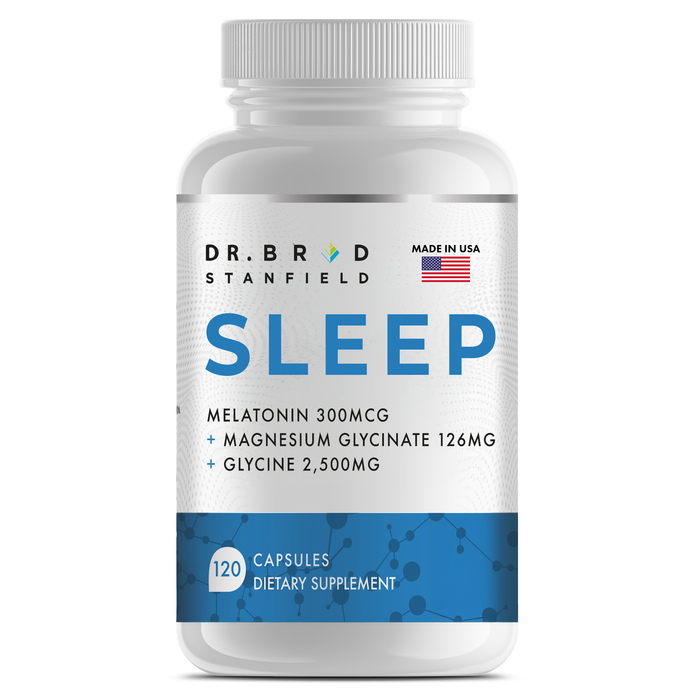
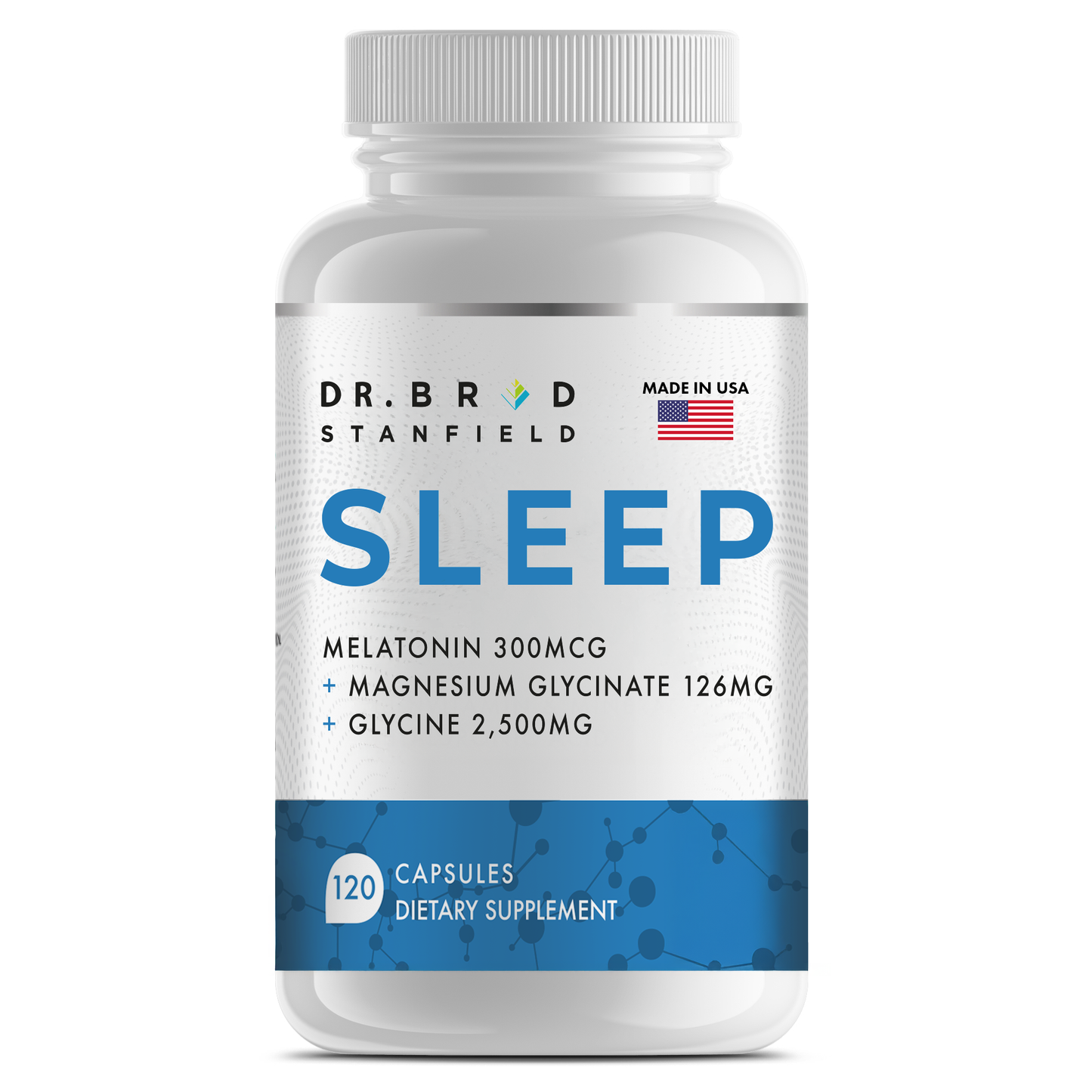
Melatonin 300 mcg
+ Magnesium Glycinate (elemental) 126 mg
+ Glycine 2500 mg
Four capsules per serving, best taken 2 hours before wanting to fall asleep
Couldn't load pickup availability



Fall Asleep Faster, Sleep Deeper, Wake Refreshed
Sleep by Dr Brad is a carefully crafted blend of melatonin, magnesium glycinate, and glycine to help you fall asleep faster, sleep deeply, and wake up refreshed. Each ingredient in the formula plays a unique role in supporting better sleep, backed by scientific research. Here’s how they work:

Gentle Melatonin (300 mcg)
Reset Your Sleep-Wake Cycle Naturally
Melatonin is the body’s natural “sleep hormone.” Meta-analyses of clinical trials show that melatonin can help people fall asleep faster [1] and improve overall sleep quality [2].
But most supplements get the dosage wrong. You will often see 3,000 mcg (3mg) or even 5,000 mcg (5mg) capsules on the shelf. While these might knock you out, they flood your receptors with up to 100 times more hormone than you actually need. Dr. Brad takes a different approach, basing the dosage on human physiology rather than marketing.
The Science of Micro-Dosing
Each night, your body naturally produces around 20–35 mcg of melatonin to signal that it's time for sleep [3, 4]. This small amount is all it takes to initiate your body's natural sleep process. But only about 15% of oral melatonin actually reaches your bloodstream [5]. The rest is broken down by your liver before it can do its job.
That's why Sleep by Dr Brad contains just 300 mcg of melatonin. When you account for absorption, this delivers approximately 45 mcg of active melatonin—enough to restore your levels to the healthy physiological range without overwhelming your system.
Why not just take more?
In a landmark MIT study, researchers compared doses of 0.1 mg, 0.3 mg, and 3.0 mg in adults over 50 with sleep difficulties [6]. The results were clear: the 0.3 mg (300 mcg) dose restored sleep efficiency and raised melatonin to normal nighttime levels. The higher 3.0 mg dose also improved sleep—but it induced hypothermia and kept melatonin levels elevated well into daylight hours, disrupting the body's natural rhythm.
A separate study in healthy young adults found that 0.3 mg of melatonin significantly reduced sleep onset latency without causing any "hangover effects" the next morning [7]. Higher doses have been associated with morning grogginess and receptor desensitization—meaning you may need more and more to get the same effect [8].
By working with your body's natural physiology rather than against it, 300 mcg provides effective sleep support without the side effects of mega-doses.
Magnesium Glycinate (126 mg elemental)
Highly Absorbable Magnesium for Sleep
Magnesium is an essential mineral that supports relaxation and healthy sleep. Dr Brad included 126 mg of elemental magnesium in the glycinate form. Magnesium glycinate is magnesium bound to the amino acid glycine, making it highly absorbable and easy on the stomach (it avoids the laxative effect some other forms can cause).
In an 8-week placebo-controlled trial with elderly insomniacs, those who took 500 mg of magnesium nightly had significantly longer sleep time, higher sleep efficiency, and shorter time to fall asleep compared to those taking a placebo [9]. A 2021 systematic review and meta-analysis also found that magnesium supplementation reduced the time it takes to fall asleep by about 17 minutes in older adults with poor sleep [10].
Glycine (2,500 mg)
The Sleep-Supporting Amino Acid
Glycine is a naturally occurring amino acid that has been studied in several human trials for its impact on sleep. It has calming neuromodulator effects and helps lower core body temperature at bedtime, which together promote better sleep architecture.
Three randomized controlled trials have demonstrated that taking 3 grams of glycine before bed can improve sleep quality, reduce time to fall asleep, and reduce fatigue the next day – all without sedative side effects [11][12][13]. Dr Brad includes a substantial 2,500 mg dose of glycine to help you fall asleep more easily, sleep deeper, and wake up with greater energy and mental clarity.
Clean, Natural, and Blue
- No artificial colors or dyes – We use natural blue spirulina for a calming bluish hue, reminiscent of the night sky.
- No titanium dioxide – A synthetic colorant often used in supplements, but not here.
- Plant-based – Made from plant-based materials with no genetically modified ingredients.
- No unnecessary fillers – Every ingredient has a purpose. No fluff.
- Non-habit-forming – Gentle enough for nightly use without causing dependency.
Quality Assurance
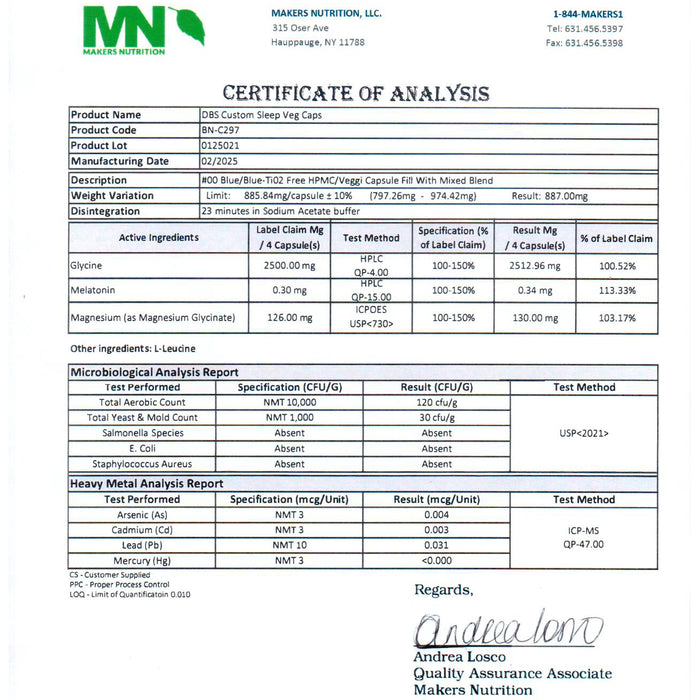
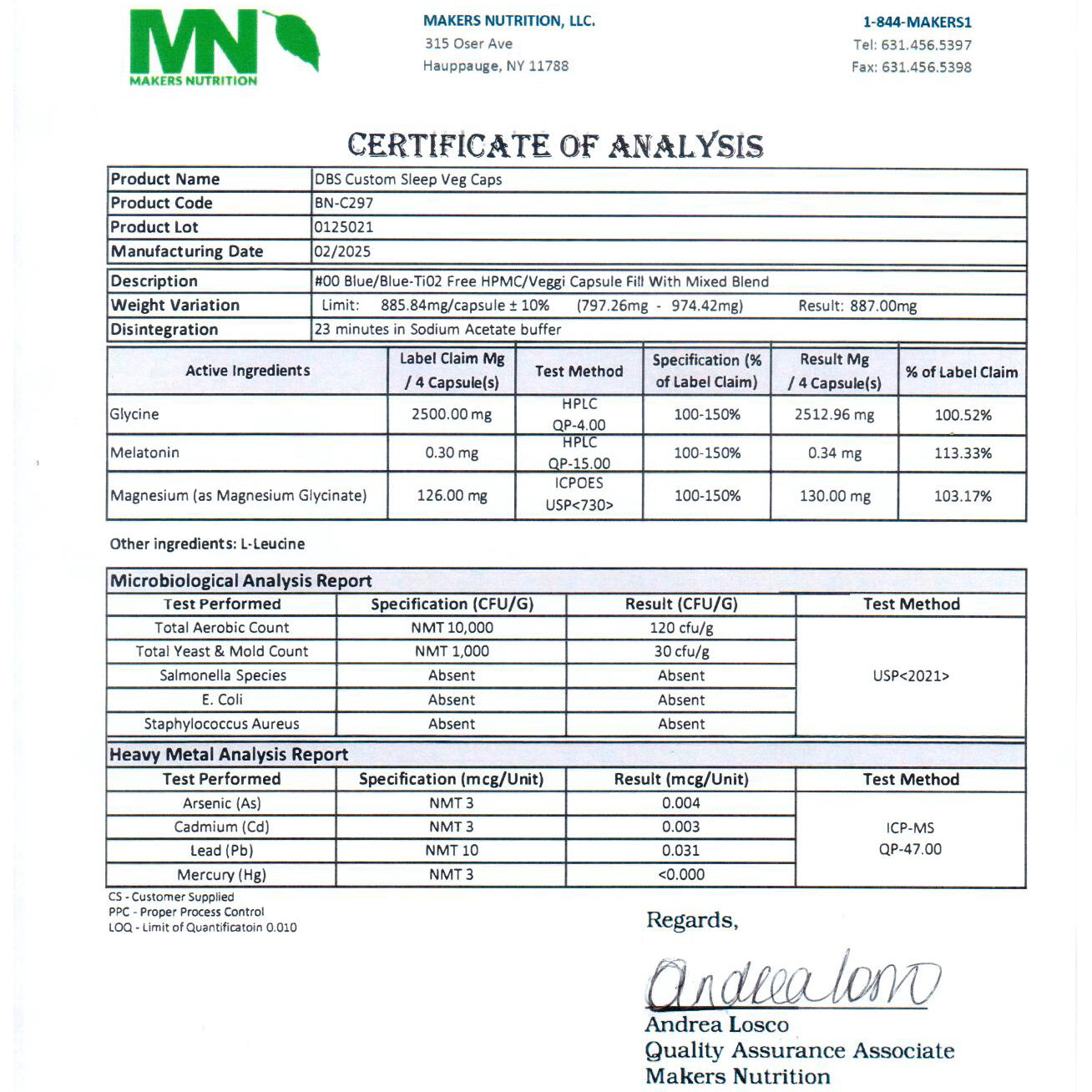
We’ve partnered with a USA supplement manufacturer called ‘Makers Nutrition’ to produce MicroVitamin. Their facilities are GMP audited and FDA registered, so you can be assured that MicroVitamin is meticulously produced and thoroughly tested for quality.
Below are the stamps of approval that Makers Nutrition qualify for:




Why Most Sleep Supplements Get It Wrong
Research shows that more isn't better when it comes to sleep ingredients. Most supplements use 10–30x too much melatonin and the cheapest forms of magnesium. Sleep by Dr Brad is formulated around what the evidence actually supports.
| Most Sleep Supplements | Sleep by Dr Brad | |
|---|---|---|
| Melatonin dose | 3–10 mg | 0.3 mg |
| Magnesium form | Oxide | Glycinate |
| Glycine | Not included | 2,500 mg |
| Unnecessary additives | Common | None |
Frequently Asked Questions
Is Sleep vegan/vegetarian?
Yes, the Sleep by Dr Brad capsules are vegan-friendly. The capsule shell is plant-based (no gelatin), and none of the ingredients are animal-derived.
Why use this supplement 2 hours before wanting to fall asleep?
Melatonin is a chronobiotic agent, meaning that it helps to regulate the body’s sleep-wake cycle.
It works best as a supplement when it’s taken before the body’s natural evening melatonin starts to rise (typically around 2 hours before wanting to fall asleep).
This helps to shift the sleep-wake cycle forward, thereby helping you to fall asleep faster.
What is Spirulina?
Spirulina is a natural blue-green algae (cyanobacteria). It also contains a vivid blue pigment called phycocyanin, and its extract is used as a natural coloring agent in foods and supplements. In this product, the blue color of the capsules comes from spirulina instead of artificial dyes.
Why is there a Prop65 warning?
Given that this is the first manufacturing batch, we were required to show California’s Proposition 65 warning.
Now that we have completed our first batch, and demonstrated with our Certificate of Analysis that this is a high quality product, for future batches we can remove the Prop65 warning.
Why is the melatonin dose only 300 mcg (much lower than many other sleep aids)?
Most over-the-counter melatonin supplements contain 3,000–10,000 mcg (3–10 mg), which is far above the body’s natural nightly melatonin production (~20–35 mcg) [3, 4].
High doses can linger in the bloodstream into the next morning, potentially causing grogginess or hormonal desensitization over time [6]. In contrast, 300 mcg (0.3 mg) is a physiological dose shown in clinical trials to improve sleep efficiency just as effectively as higher doses, but without the side effects [6].
This approach supports your body’s natural rhythm without overwhelming it.
Is it safe to take this supplement every night long-term?
Yes, this supplement is designed for regular use and includes ingredients that are considered safe for long-term use in healthy adults.
Melatonin has been studied in clinical trials without evidence of withdrawal or tolerance at low doses [1, 2].
Magnesium and glycine are essential nutrients or amino acids with excellent safety profiles when used within typical supplemental ranges [9, 10] and [11, 12, 13].
As always, speak with your healthcare provider if you have underlying health conditions or are taking medications that affect sleep or neurotransmission.
Will I feel groggy the next morning after taking it?
Unlikely. Unlike high-dose melatonin supplements that can leave you with residual drowsiness, the 300 mcg dose in this formula is low enough to wear off by morning, helping you avoid the “melatonin hangover” effect [6, 7].
In fact, research shows that low-dose melatonin combined with glycine may help you feel more refreshed and alert the next day, not groggy [13].
This supplement is formulated to support restful sleep while allowing for a clear, energetic morning.
A note from Dr Brad Stanfield, Primary Care Physician
My primary goal is to support the well-being of my audience. I can’t emphasize enough however that a balanced diet comes first, and I strongly advise you to consult with your healthcare provider before starting any supplement.
Questions/Comments?
If you would like any further information about Sleep by Dr Brad, please contact us using the form below
Contact form
References
- Ferracioli-Oda, E., Qawasmi, A., & Bloch, M. H. (2013). Meta-analysis: Melatonin for the treatment of primary sleep disorders. PLoS One, 8(5), e63773. https://doi.org/10.1371/journal.pone.0063773
- Gholami, F., et al. (2022). Effect of melatonin supplementation on sleep quality: A systematic review and meta-analysis. Journal of Neurology, 269(1), 205–216. https://doi.org/10.1007/s00415-020-10381-w
- Fourtillan, J. B., et al. (2001). Melatonin secretion occurs at a constant rate in both young and older men and women. American Journal of Physiology-Endocrinology and Metabolism, 280(1), E11–E22. https://doi.org/10.1152/ajpendo.2001.280.1.E11
- Mahle, C. D., et al. (2004). Melatonin secretion in older adults with insomnia. The American Journal of Medicine, 116(2), 91–95. https://doi.org/10.1016/j.amjmed.2003.08.026
- DeMuro, R. L., et al. (2000). The absolute bioavailability of oral melatonin. Journal of Clinical Pharmacology, 40(7), 781–784. https://doi.org/10.1177/009127000004000712
- Zhdanova, I. V., et al. (2001). Melatonin treatment for age-related insomnia. Journal of Clinical Endocrinology & Metabolism, 86(10), 4727–4730. https://doi.org/10.1210/jcem.86.10.7901
- Zhdanova, I. V., et al. (1996). Effects of low oral doses of melatonin, given 2-4 hours before habitual bedtime, on sleep in normal young humans. Sleep, 19(5), 423-431. https://doi.org/10.1093/sleep/19.5.423
- Wurtman, R. J. (2005). Low melatonin doses work best for insomnia. MIT News. https://news.mit.edu/2005/melatonin
- Abbasi, B., et al. (2012). The effect of magnesium supplementation on primary insomnia in elderly: A double-blind placebo-controlled clinical trial. Journal of Research in Medical Sciences, 17(12), 1161–1169. https://www.ncbi.nlm.nih.gov/pmc/articles/PMC3703169/
- Mah, J., & Pitre, T. (2021). Oral magnesium supplementation for insomnia in older adults: A systematic review & meta-analysis. BMC Complement Med Ther, 21, 125. https://doi.org/10.1186/s12906-021-03297-z
- Inagawa, K., et al. (2006). Subjective effects of glycine ingestion before bedtime on sleep quality. Sleep and Biological Rhythms, 4(1), 75–77. https://doi.org/10.1111/j.1479-8425.2006.00193.x
- Bannai, M., et al. (2012). The effects of glycine on subjective daytime performance in partially sleep-restricted healthy volunteers. Frontiers in Neurology, 3, 61. https://doi.org/10.3389/fneur.2012.00061
- Yamadera, W., et al. (2007). Glycine ingestion improves subjective sleep quality in human volunteers, correlating with polysomnographic changes. Sleep and Biological Rhythms, 5(2), 126–131. https://doi.org/10.1111/j.1479-8425.2007.00262.x